
Reactions have continued to trail the Niger Military Coup of Monday 26th June 2023. In the wake of this event, soldiers of the presidential guard had detained President Muhammad Bazum and subsequently announced a new Leadership in the West African Country.
As part of efforts to open up discussions on this ongoing political developments in Niger and other countries in West Africa, experts brought together by Equity International Initiative have called on the Economic Community of West African States (ECOWAS) to review the regime of sanctions imposed on Niger followed a military coup that removed the democratically elected President Muhammad Bazum.
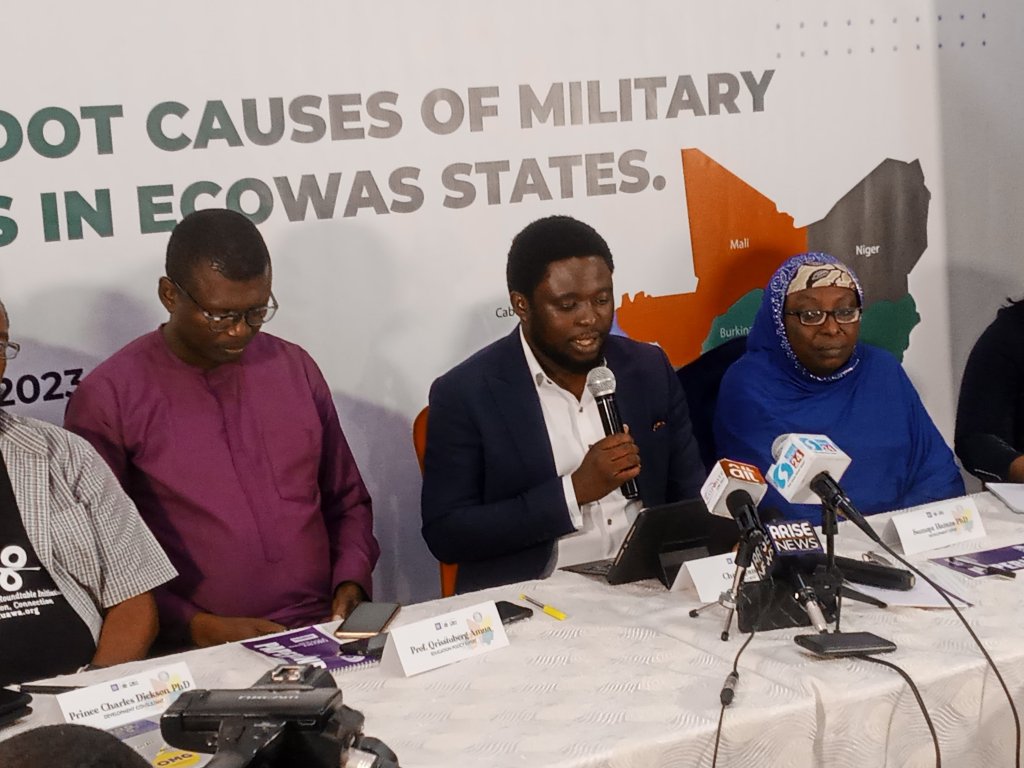
The call was contain in a communique’ read by the Country Director of Equity International Initiative Ambassador Chris Iyama at the end of the one-day expert dialogue on International Diplomacy with the theme ‘Addressing Root Causes of Military Interventions in ECOWAS States’ held in Jos, the Plateau State Capital on Tuesday 15th August 2023.
The event had in attendance experts from the Civil Society, the Academia, Legal Practice and the Media who objectively discussed some of the sailant causes of military interventions across the West African Sub Region in recent times.
In the wake of these developments, ECOWAS announced a number of sanctions aimed at the Junta, Abdourahamane Tchiani, who is the president of the National Council for the Safeguard of the Homeland (CNSP). ECOWAS rejected the military take-over and has called on the coup plotter to reinstate democracy by returning Muhammad Bazum.

The group identified Internal factors responsible for Military Interventions to include but not limited to: Economic inequalities and Corruption, Non-accountability by political office holders, Suppression of human rights and dictatorships in democratic governance, Insecurity, Disenchantment with the democratic process as a result of gaps in the democratic governance structure and Erosion of social justice and civil order. Others include the Underutilization of the youth population, Resource curse, Citizens discontentment and rising sense of being short-changed by the political leaders in West Africa, the negative effects of fake news, Violent activities of non-state and state actors and irresponsible local media and the influence of local Jihadi groups.
They however identified external factors to include France neo-colonial policies and entanglement with Francophone West Africa, Double standards by the ECOWAS Commission, Desire by West African countries to detach from foreign control, The undesirable activities of international conflict merchants and a crafting of the ECOWAS story from outside of West Africa. Other issues include the Deteriorating socioeconomic and security situation in Sahel Africa, the fall of Gadaffi which opened the floodgate for the prolifiration of Small Arms and Light Weapons (SALWs), Globalization and proliferation of social media fake news. Other issues raised include the Penchant for cynicism and sarcasm, influence of international Jihadi groups, Shift in the global power system from a unipolar to multipolar system and the Use of Africa as a battle ground for Western power struggle.”
The group itemized Some of the implications of the Military intervention in Niger to include the following:
“a) Potential proliferation of insecurity across the sub region
b) Disruption of existing smooth relationships with neighboring West African countries
c) Negative socioeconomic implications for Nigeria
d) Humanitarian crisis
e) A call for effective leadership and transformative political leadership in other member states.”
Other recommendations besides the call on ECOWAS to reviews regime sanctions include the review of France colonial policies, review of the 1979 ECOWAS protocol and other trade agreements to leverage socioeconomic cooperation between African States Governments of ECOWAS member states should promote accountability, a proactive fight to combat insecurity, a more effective control of West African porous borders among many more.

 Nigeria Star News